
Clay Plaster Saudi Arabia – Comprehensive Guideto Sustainable, Heritage-Rich Finishes
- محمد عصام
- Nov 9, 2025
- 5 min read

Updated: Apr 28
Clay Plaster: The Sustainable Choice for Luxury Design in Saudi Arabia
Clay Plaster is a natural wall finish that is gaining popularity in Saudi Arabia’s luxury design scene. Clay plaster, often known by the product name Claystone, is an eco-friendly, mineral-based coating made primarily from natural clay, aggregates, and pigments. In Saudi Arabia, clay plaster finishes are experiencing a revival as architects and homeowners seek sustainable materials that also reflect the region’s heritage. This finish is applied by hand to walls and ceilings, creating a seamless surface with an earthy warmth and texture.
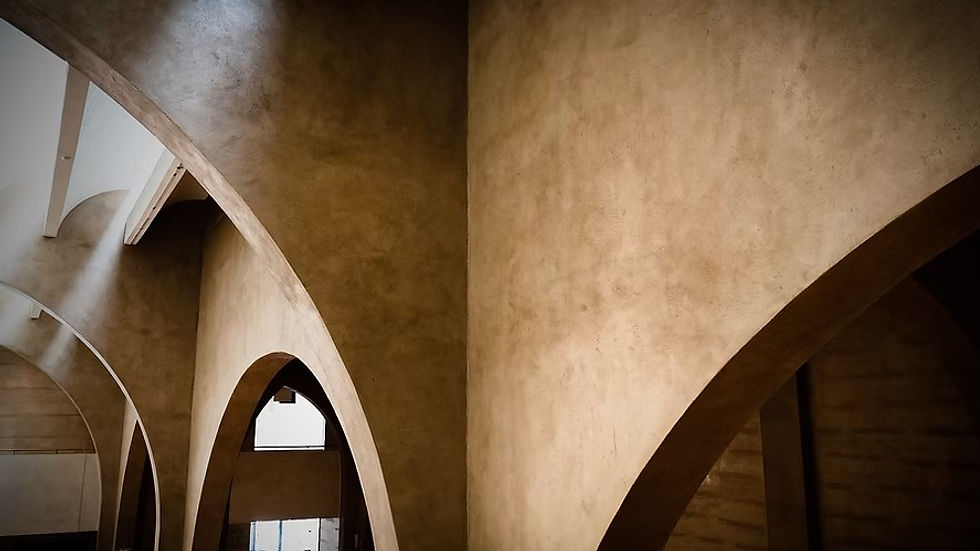
Unlike conventional gypsum or cement plasters, clay plaster is 100% natural and free of VOCs (volatile organic compounds). It allows walls to “breathe,” regulating indoor humidity and contributing to healthier indoor air quality. Clay Plaster in Saudi Arabia offers a modern take on ancient mud plaster techniques, delivering both rustic charm and contemporary elegance
Read More : Clay plaster in riyadh
The Rise of Clay Plaster in Modern Design
From upscale villas in Riyadh to cultural museums in Madinah, clay plaster is becoming a go-to choice for those who value sustainability and a connection to local tradition. It embodies the desert’s tones and textures, bringing a touch of nature inside while meeting modern performance standards.
Historical Journey – Clay Plaster in Saudi Arabia’s Heritage
The Roots of Clay Plaster in Saudi Architecture
Clay plaster has deep roots in Saudi Arabia’s architectural heritage. For centuries, local builders used mixtures of clay, sand, and straw to plaster the walls of homes, mosques, and forts. In the oases and mudbrick villages of Najd and the Hijaz, earthen plaster was the default finish – applied to thick adobe walls to protect them from erosion and insulate interiors from the harsh climate.

These traditional clay plasters gave Saudi buildings their characteristic sandy-brown look that blended harmoniously with the landscape. In places like Diriyah (the historical capital near Riyadh) and Al-`Ula, one can still see beautifully preserved mudbrick structures where clay plaster served both functional and decorative roles. It kept interiors cool and comfortable long before air conditioning, and its soft, organic appearance defined the vernacular aesthetic. Builders would often imprint tribal patterns or add straw for texture, creating finishes that were unique to each region.
This earth-based craftsmanship was not just about practicality – it was an expression of culture and identity. As Saudi Arabia urbanized in the 20th century, modern cement-based plasters and paints largely replaced clay in new construction. However, the legacy lived on in heritage sites and rural areas. Today, with renewed appreciation for sustainable design, architects are looking back at these roots. Modern Clay Plaster in Saudi Arabia seeks to recapture the beauty and benefits of the old mud plasters while using improved materials like Claystone for greater durability. In doing so, contemporary projects pay homage to the kingdom’s rich architectural traditions.
Clay Plaster in Salmani Architecture
In recent years, “Salmani Architecture” has emerged as a guiding design philosophy in Riyadh and across Saudi Arabia. Championed by King Salman’s architectural charter, this approach emphasizes preserving cultural heritage, authenticity, and human-centric design — all while embracing modernity. Clay plaster aligns perfectly with Salmani principles. It embodies authenticity by using natural local materials reminiscent of historic Saudi dwellings. It provides a tangible continuity with the past, carrying forward the look and feel of traditional clay walls into new buildings in a refined manner.
Salmani architecture also values sustainability and innovation. Clay plaster addresses sustainability through its low environmental impact and ability to improve indoor climate (naturally cooling spaces and reducing energy use). It contributes to healthier, more livable environments for occupants, an important Salmani value, by being non-toxic and enhancing comfort. In terms of innovation, today’s Claystone plaster is a technological evolution of age-old clay mixtures – it’s formulated for strength and versatility, allowing architects to use an ancient material in cutting-edge designs.
One can see Salmani architecture ideals and clay plaster united in prominent projects. Heritage museums, cultural centers, and even contemporary majlis spaces in Riyadh have started featuring clay or clay-like plasters as wall finishes. Designers deliberately incorporate arches, calligraphic motifs, and earthy surfaces that echo traditional Saudi aesthetics.
Modern cultural buildings in Saudi Arabia often blend traditional forms and materials; here, natural earth-toned plaster complements Salmani arches. In the Prince Mohammed Bin Salman Calligraphy Museum in Madinah, for example, Conmarble applied seamless natural plasters that evoke the feeling of historic mud architecture while meeting modern performance needs. The result is architecture that feels at once timeless and forward-looking – exactly the balance Salmani design strives for.
By reintroducing clay plaster into contemporary projects, Saudi architects honor the kingdom’s architectural lineage. They create spaces that feel distinctly Saudi, with warm, textural finishes that harken back to ancestral building techniques. Clay plaster thus is not just a design element, but a cultural bridge between old and new in Saudi Arabia’s built environment
Read More : clay plaster in riyadh
Composition and Characteristics of Clay Plaster (Claystone)
Clay plaster is fundamentally composed of natural earthen materials, making it an environmentally friendly choice. The primary ingredient is clay – a fine-grained soil rich in minerals – which acts as the binder. Blended into the clay are aggregates like sand, marble dust, or other mineral powders that give the plaster body and strength. Claystone, the proprietary clay plaster blend used by Conmarble, also incorporates advanced additives (all non-toxic) that enhance its performance.
These might include natural fibers for reinforcement and special hardeners or binders that improve adhesion and durability without compromising breathability. The result is a mineral plaster that is far tougher than a simple mud plaster, yet retains the earth-derived purity. Key characteristics of Claystone clay plaster include its breathability and hygroscopic nature. The plaster allows water vapor to diffuse through, which means walls can “breathe.” This helps regulate indoor humidity: the clay will absorb moisture in humid conditions and release it when the air is dry. In a climate like Saudi Arabia’s, this property is invaluable for maintaining comfort – interiors stay cooler and condensation is minimized.
Clay plaster surfaces are also thermally massive, meaning they absorb heat slowly and release it slowly, smoothing out daily temperature swings. Rooms finished in clay plaster often feel naturally cooler in the day and cozier at night.
Why Choose Cemher Claystone Clay Plaster?
Cemher’s Claystone is not just any clay plaster – it is a premium formulation that elevates ancient material to modern luxury standards. Here are some compelling reasons architects and designers in Saudi Arabia are opting for Cemher Claystone for their projects:
Authentic Look with Modern Strength: Claystone delivers the natural, earthy aesthetic of traditional clay or mud plaster, but with vastly improved strength and durability. It has been formulated by Cemher (a leading sustainable finishes manufacturer) to be tougher and longer-lasting than a basic earth plaster.
This means you can achieve an authentic rammed-earth or adobe look in high-end interiors without worrying about the surface crumbling or eroding over time. Claystone’s enhanced composition ensures it adheres firmly and stays intact even in busy commercial settings.

In essence, choosing Cemher Claystone clay plaster means you don’t have to compromise between tradition and performance. You get the earthy beauty, texture, and cultural resonance of clay, coupled with the reliability of a high-tech product. It’s a finish that suits a palace in Riyadh as much as a boutique resort in AlUla. With Claystone, Conmarble’s team can deliver bespoke, artisanal walls that are also resistant to wear, easy to maintain, and built to last. It represents a smart, future-forward adoption of one of humanity’s oldest construction materials.

Comments