
Best Microcement for Bathrooms: Specification Guide for Luxury & Commercial Projects
- محمد عصام
- Oct 14, 2025
- 3 min read

Microcement has become a key solution for luxury bathrooms and wet zones in high-end hospitality, commercial interiors, and architectural design. When carefully specified and properly installed, it delivers seamless, durable, and water-resistant surfaces that meet both aesthetic and performance demands.
This guide helps you choose the best microcement systems for bathrooms, with technical factors, design considerations, and application tips that align with current sustainable standards and architectural expectations.
Read more : Microcement Bathrooms
What Makes a Great Microcement System for Bathrooms
To perform well in a bathroom environment, a microcement system must meet several essential criteria. As specifiers and designers, you should look for:
Criterion | Importance |
100% Waterproofing (Wet Zone Grade) | Ensures protection in showers, wet walls, and floor‐wall junctions. Products should be designed for wet zones or have integrated waterproofing membranes or sealers. |
Seamless & Jointless Finish | Eliminates grout joints where moisture and bacteria tend to accumulate. This improves hygiene and ease |
Slip Resistance | Essential for safety in bathroom floors and shower trays—especially in public/commercial settings. Look for certifications or textured finishes. |
Durability (Abrasion / Chemical Resistance) | Should resist daily wear, cleaning agents, soaps, moisture, and chemicals common in bathrooms. |
Suitable Thickness & Layering System | Typical systems for bathrooms use 2-3 mm total thickness, with base + intermediate coats + protective |
Maintenance & Hygiene | Easy-to-clean surfaces, low porosity, and stain / mold resistance are key for long-term performance. |
Key Features to Prioritize from Conmarble’s Product Line
When selecting among Conmarble’s microcement offerings (or any high-end system), make sure to ask for:
A waterproof finish / wet-zone rated system in the product spec.
Documentation for VOC-free materials and environmental certifications (e.g. LEED/BREEAM) for indoor air quality and sustainability compliance.
Technical datasheets showing adhesive strength, abrasion resistance, and slip resistance values.
Options for different finishes and textures (e.g. matte, satin, stone, smooth) to match design needs.
Assurance that the system includes or is compatible with proper sealing, especially in shower enclosures and floor-to-wall joints.

Where & How to Apply Microcement in Bathrooms
To maximize performance and maintain aesthetics, here are common applications and best practices:
Shower walls, floors & trays: Use integrated waterproof membranes or sealers at corners and drains to prevent moisture ingress.
Vanity units & countertops: Apply microcement over stable substrate; ensure edges are sealed.
Bathroom walls: Can go up to ceilings; avoid material movement (substrate must be stable).
Floor work & underfloor heating: Most high-quality microcement systems perform well over underfloor heating. Proper expansion joints and sealants are necessary.
Case Example
One of Conmarble’s hospitality projects deployed a wet-zone microcement system in a luxury hotel’s spa bathrooms. The specification included a base waterproof membrane, two coats of microcement overlay, a texture finish in satin sheen, and a protective top sealer. The final result: seamless wet areas with excellent hygiene, water resistance, and a monolithic aesthetic from floor to ceiling.
Maintenance, Longevity & Lifecycle
To ensure long-term performance:
Use pH-neutral cleaners; avoid acidic or abrasive chemicals.
Re-seal or re-coat protective topcoat when wear begins, especially in high-contact areas.
Ensure good ventilation to reduce humidity and condensation.
Proper installation with attention to substrate prep, correct layer thickness, and edge detailing.

Specification Template (Suggested Outline for Project Documents)
Below is a template structure you can adapt for architectural drawings or material schedules:
Product Name / System: [e.g. Conmarble Microcement Wet-Zone System]
Substrate: concrete / tile / plasterboard (state existing condition)
Layer System: primer → base coat → intermediate layers → finish texture → protective sealer/topcoat
Total Thickness: approx. 2-3 mm
Waterproofing: integrated membrane / waterproofing sealers at floor-wall joints & drains
Surface Finish: [matte / satin / smooth / textured]
Slip Resistance: [specify class or certification]
Environmental Compliance: VOC level, LEED / BREEAM credits, etc.
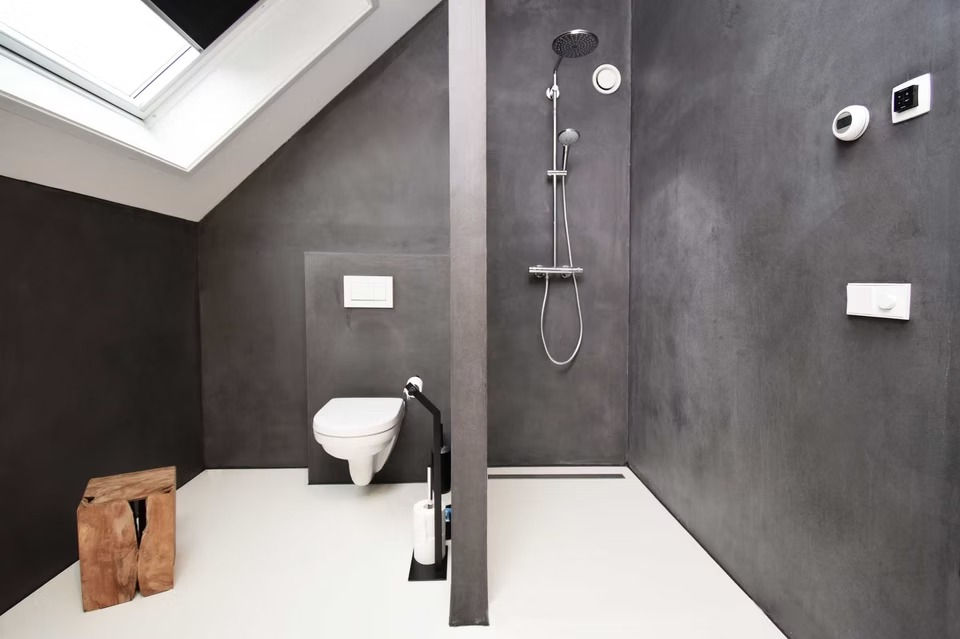
The best microcement for bathrooms is not just about the look — it’s about performance, hygiene, safety, and sustainability. For luxury, commercial, or hospitality applications, prioritizing waterproof wet-zone systems, seamless finishes, strong adhesion, slip resistance, and durable protective topcoats ensures a surface that retains beauty and function over time.
For your next bathroom or wet zone project, explore our Microcement Products catalogue and connect with our Specification Team to select the system that best aligns with your design vision and performance needs.


Comments